
What Cumberland Can Teach Us About the First Dollar
Taking the Work on the Road
This year, the Maryland Community Investment Corporation has been spending more time outside of Baltimore. We’ve convened interagency development partners in Prince George’s, Montgomery, and Charles counties, and in January brought rural economic development leaders together for a convening that included a site visit in Cambridge with the Public Finance Initiative.
On a recent trip to Western Maryland, we broke bread with Matt Miller of the Cumberland Economic Development Corporation, Elizabeth Stahlman Logsdon of the Tri-County Council of Western Maryland, and Brandon Butler of Pinnacle Strategies for a catch-up and deep dive into the region’s development landscape.
Growing the Pie
The conversations are part of MCIC’s effort to soften the ground for New Markets Tax Credit (NMTC) transactions beyond Baltimore, where roughly 90% of Maryland’s NMTC deals have taken place. That concentration represents community facilities funding that has largely missed communities elsewhere in the state: food pantries, recreation centers, workforce training sites, and other projects. MCIC plans to grow the pie so that Baltimore continues to meet its needs with creative financing, while other parts of the state have a shot of doing so too.
Our thesis is that predevelopment lending can help achieve that. By providing early capital for feasibility, design, permitting, and other upfront costs, we can help developers and local institutions build the capacity to pursue complex financing while getting promising projects further along toward an eventual NMTC transaction. MCIC hopes to launch a predevelopment loan fund for rural and small city Maryland in the months to come.
What We Heard in Cumberland
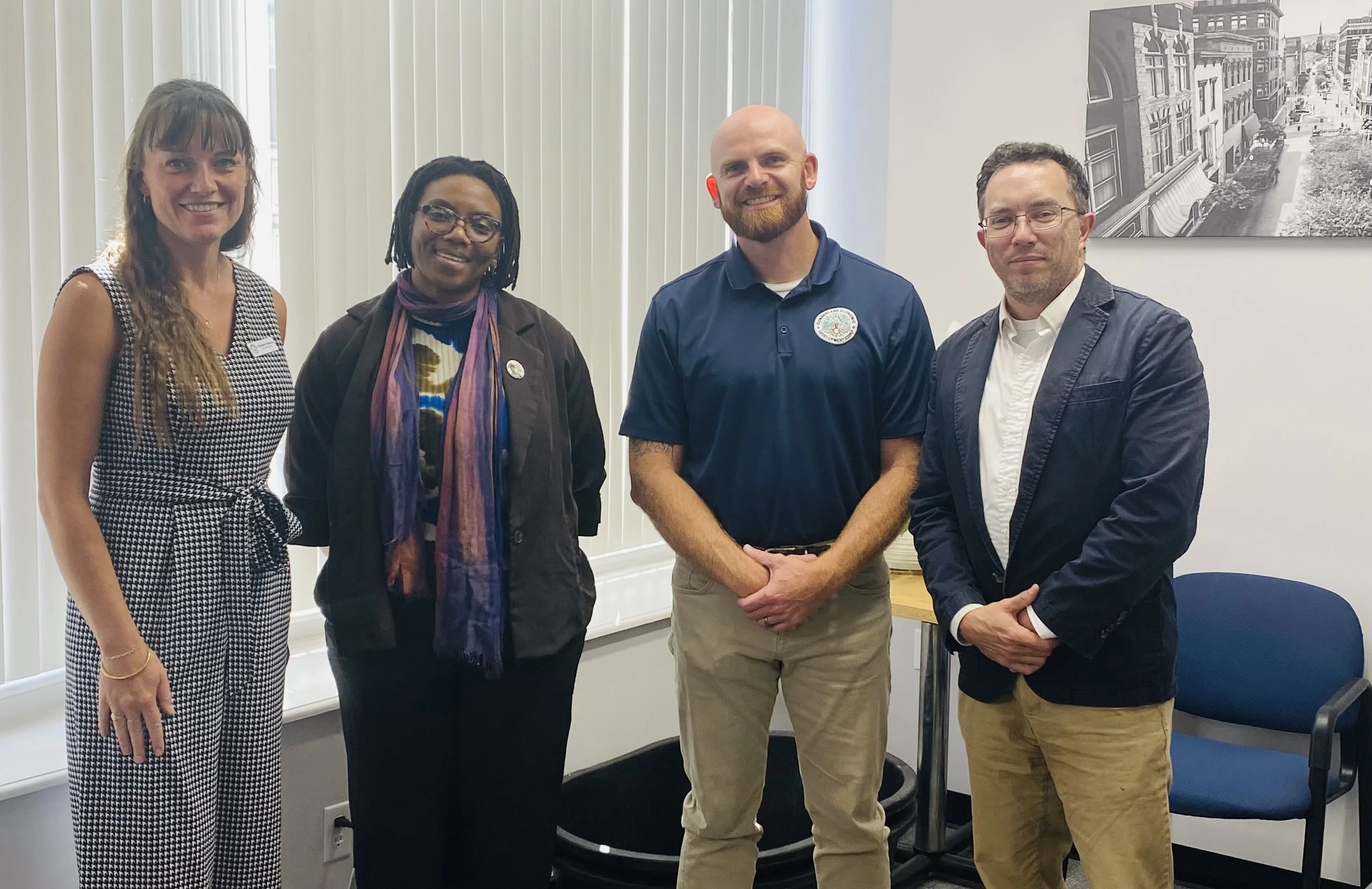
In Cumberland, Matt and Liz gave us a useful picture of what that work looks like on the ground. There is familiarity with community development finance in Western Maryland, but less experience with NMTC. There are active local lenders, including the Tri-County Council’s revolving loan fund, which has now been revamped to be more risk tolerant — a signal that local capital is trying to move toward the kind of early-stage risk predevelopment lending is built for.
Cumberland’s own downtown is a case study in long-horizon thinking. Back in 1978, the city closed Baltimore Street to vehicular traffic and built a pedestrian main street, designed to give downtown an outdoor plaza that could, theoretically, compete with the suburban shopping malls pulling foot traffic away. Over the years, the concept grew counterproductive from an economic development standpoint which ultimately led to the investigation of reopening the street. After years of planning and design due diligence, the City embarked on a total redevelopment of its downtown – both above and below grade. The new, woonerf-inspired thoroughfare has already yielded tremendous results, attracting new businesses and private investment not seen since the historic buildings that line the downtown streets were constructed.
Cumberland Economic Development Corporation has taken a similarly patient approach to its own balance sheet: it generates revenue through strategic real estate acquisition, by leveraging its assets to structure private public partnerships that encourage private investment, then reinvests any revenue generated into future projects. As an example, CEDC purchased a prominent building in downtown with a capital grant they procured in FY2017. Once the asset was secured, they structured a PPP with a local developer by owner-financing the property to the developer and then taking a second lien position to allow them to obtain the necessary financing to renovate the building. The partnership yielded a $6.5 million project, converting the property into a mixed-use hub with ground-floor retail, office space in the middle floors, and 26 residential units on top 3 floors.
A Region with its Own Terms
At the same time, the development challenges are highly specific to place. Cumberland is trying to create new housing in a market where the average home price makes new construction difficult to pencil. There is developable land in the county, but often not the infrastructure to support it. Given Western Maryland’s distinct geography, topography, and economy, West Virginia and Pennsylvania are often more useful comparisons than other parts of Maryland.
Local economic development organizations are sometimes filling gaps left by a private sector that has limited incentive to take on the early work of preparing land or properties for development, including basic connectivity. There is already public transit serving Frostburg State University, including routes that connect students to Main Street Frostburg and the Country Club Mall in LaVale. What Cumberland and Frostburg would like to see is an extension of that service into Cumberland, along with later evening hours. Funding is the limiting factor. With no reliable Uber or Lyft presence in Allegany County, transportation options are more limited than they are in Maryland’s more urban areas. The region is still working through a longer economic transition, too — from the employment base the Celanese factory once provided to the state prison system that has partly replaced it.
The First Dollar Problem
One observation from the conversation stuck with us: everyone in the capital stack wants to be the last dollar in. Few want to be the first. The Wills Hotel is a proof point of what’s possible when someone does. Developed with historic tax credits, it shows what creative financing can unlock in a market where conventional debt alone wouldn’t have made the deal work. For MCIC, that is precisely where predevelopment lending can matter. The first dollars can create the runway for a project to become financeable in the first place.
Building Local Capacity
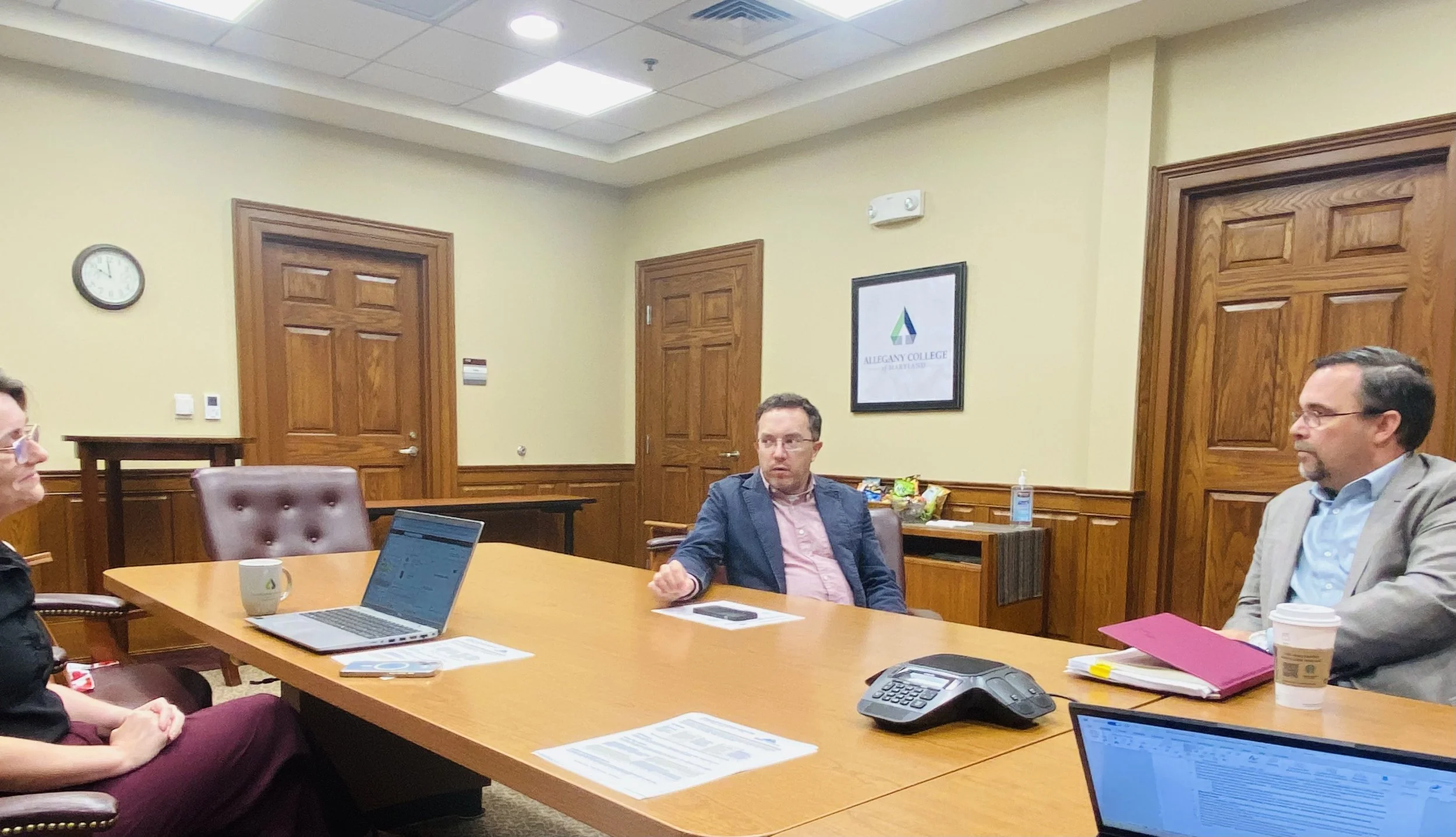
Our visit to Allegany College of Maryland sharpened the point. The college is working toward the creation of a local CDFI to help entrepreneurs who do not fit neatly into collateral-based lending, while giving the region a lender willing to put the first dollar into projects that need more capital behind them. The effort builds on relationships already in place, including the college’s foundation, local government, and the Tri-County Council. It also reflects something we heard throughout the trip: rural economic development requires creativity, local trust, and institutions willing to do more with less.
The Appalachian Regional Commission planning grant supporting the effort is being led by Brandon Butler, owner of Pinnacle Strategies. Brandon is a former county administrator and state workforce development leader with deep relationships across the region. That choice says something important about building financial capacity in rural places. Understanding the place itself is key. A locally rooted institution can see opportunities and relationships that an outsider might miss and can build from the trust that already exists.
The Work Ahead
The first dollars can create the runway for a project to become financeable in the first place. But the lesson from Cumberland is broader. Sometimes the first dollar is not just capital. It is the first institution willing to take a risk, the first partner willing to convene the right people, or the first local lender willing to say yes. MCIC’s work is to help create more of those first dollars across Maryland.