
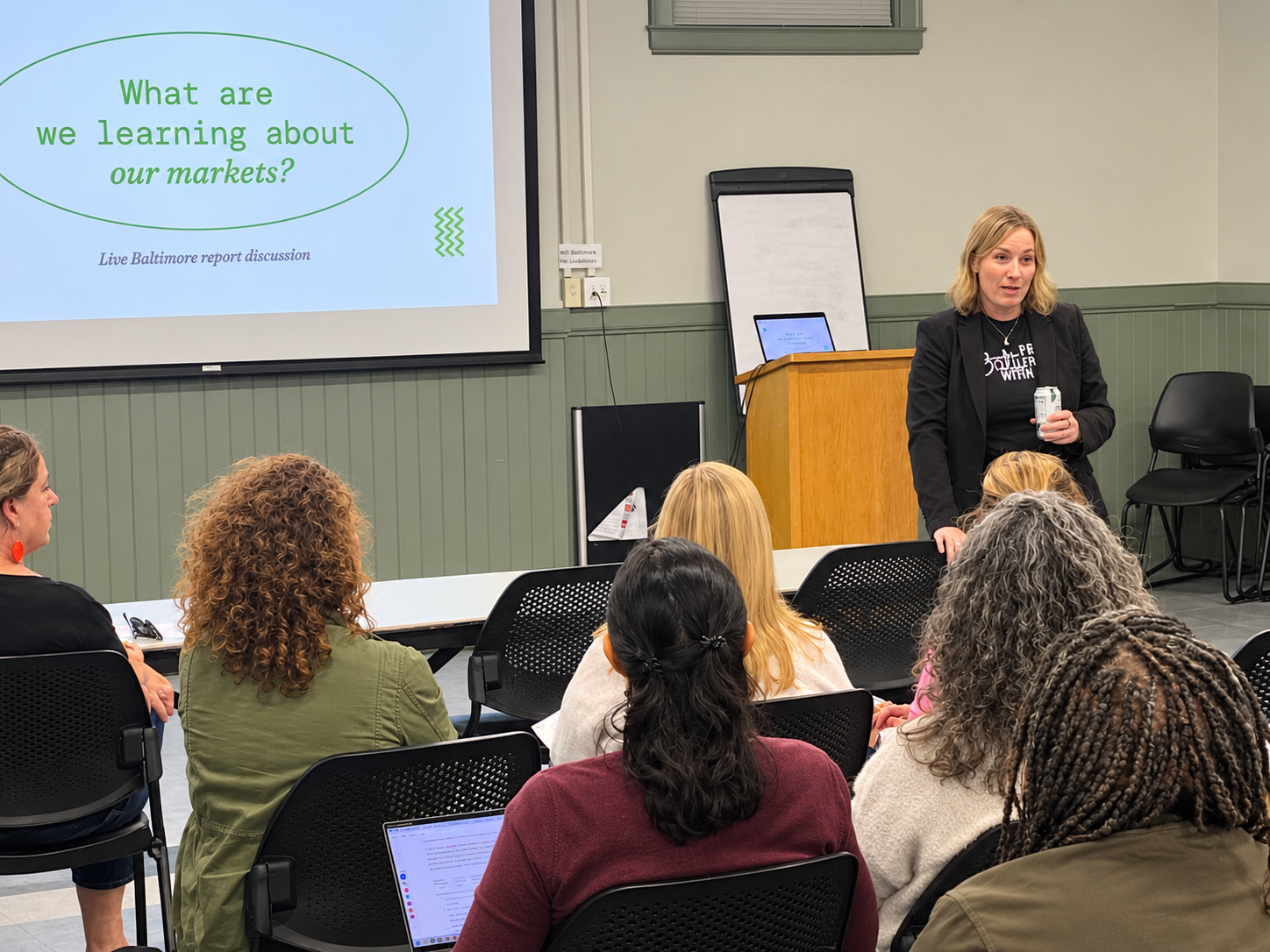
Live Baltimore’s Meghan McCorkell discusses how she liaises with prospective buyers and real estate professionals to “sell” Baltimore.
Selling a Home Means Selling More Than a House
Selling a renovated home is only half the work. At our October 30 convening, Baltimore community development organization (“CDO”) borrowers shared how they approach the other half: connecting completed and in-progress homes with buyers who can see themselves living there.
Their strategies start long before a property hits the market. Some organizations pre-sell homes, identifying prospective buyers before construction is complete. Homebuyers clubs help renters build the knowledge and confidence to pursue ownership, sometimes right in the neighborhoods where they already live. Others invest in interior design and staging to help buyers envision a home’s potential.
And sometimes, the best prospects are people who have already left. CDOs take an alumni approach, reconnecting with former residents and people whose family ties to a neighborhood remain meaningful. One buyer might be drawn back to a grandparent’s block; another might be looking for the affordability and community of Baltimore after years in a more expensive city.
Jen Goold of Neighborhood Design Center offers a useful framework: marketing means selling three things at once. There is the house itself, including its features and finishes. There is the neighborhood, including its character and amenities. And there is the program: BVRI’s interest rate reduction and down payment assistance, alongside the opportunity to participate in a generational effort to bring more residents back to Baltimore neighborhoods.
That final piece matters. The work is not without challenges, including concerns about marketing homes in areas experiencing persistent drug activity. Our convenings create space for CDOs to tackle these difficult questions together, sharing strategies grounded in the realities of their work.
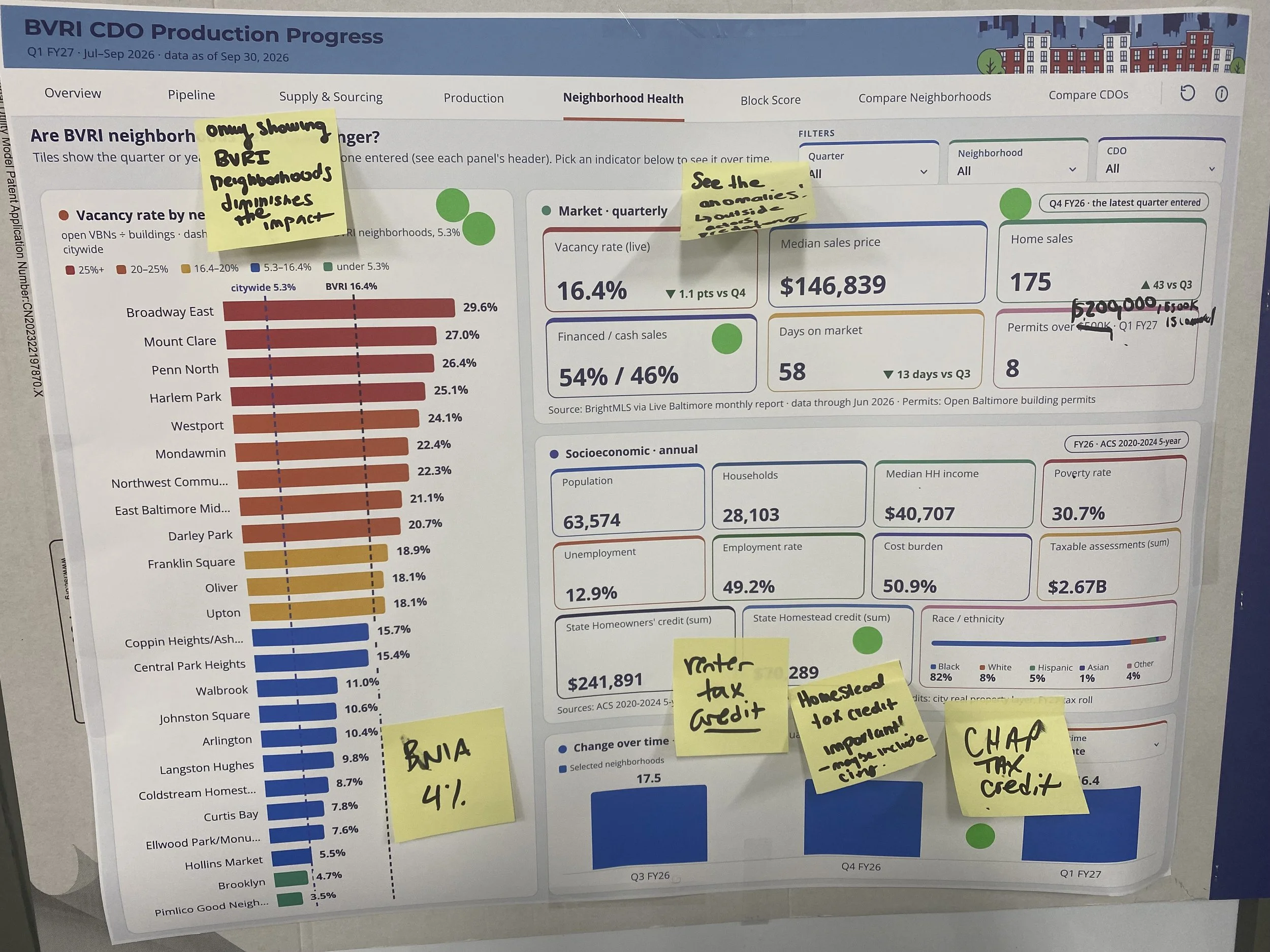
BVRI borrowers use Post-it notes to provide feedback on Maryland DHCD’s data dashboard updates.
How BVRI Helps CDOs Sell
BVRI gives CDO sellers three tools to put in front of buyers: a lower interest rate, down payment assistance, and one place to find homes. Healthy Neighborhoods, Inc. (“HNI”) delivers the rate reduction through its Reinvest Baltimore Rate Savings grants. Neighborhood Housing Services (“NHS”) administers the down payment assistance. In the first three months of FY27, NHS issued 40 down payment assistance awards to BVRI buyers. Once layered with other state and city programs, some buyers with DPA from NHS arrive at the closing table with up to $100,000 in grants.
HNI’s results show the demand. Since the formal launch of Reinvest Baltimore on July 1, HNI has awarded 36 rate savings grants: 16 homes delivered and 20 awarded. The median sale price is $288,685, and the median grant cost is $20,500. Johnston Square (7), Harlem Park (6), and Upton (5) lead the neighborhoods served so far. HNI now averages about two ratified contracts per week.
Buyers know where to look. HNI maintains a webpage listing every BVRI property and whether it is pre-sold. Maryland DHCD and MCIC are also brokering a partnership with Live Baltimore, so that it can bring BVRI into its conversations with homebuyers and real estate professionals.
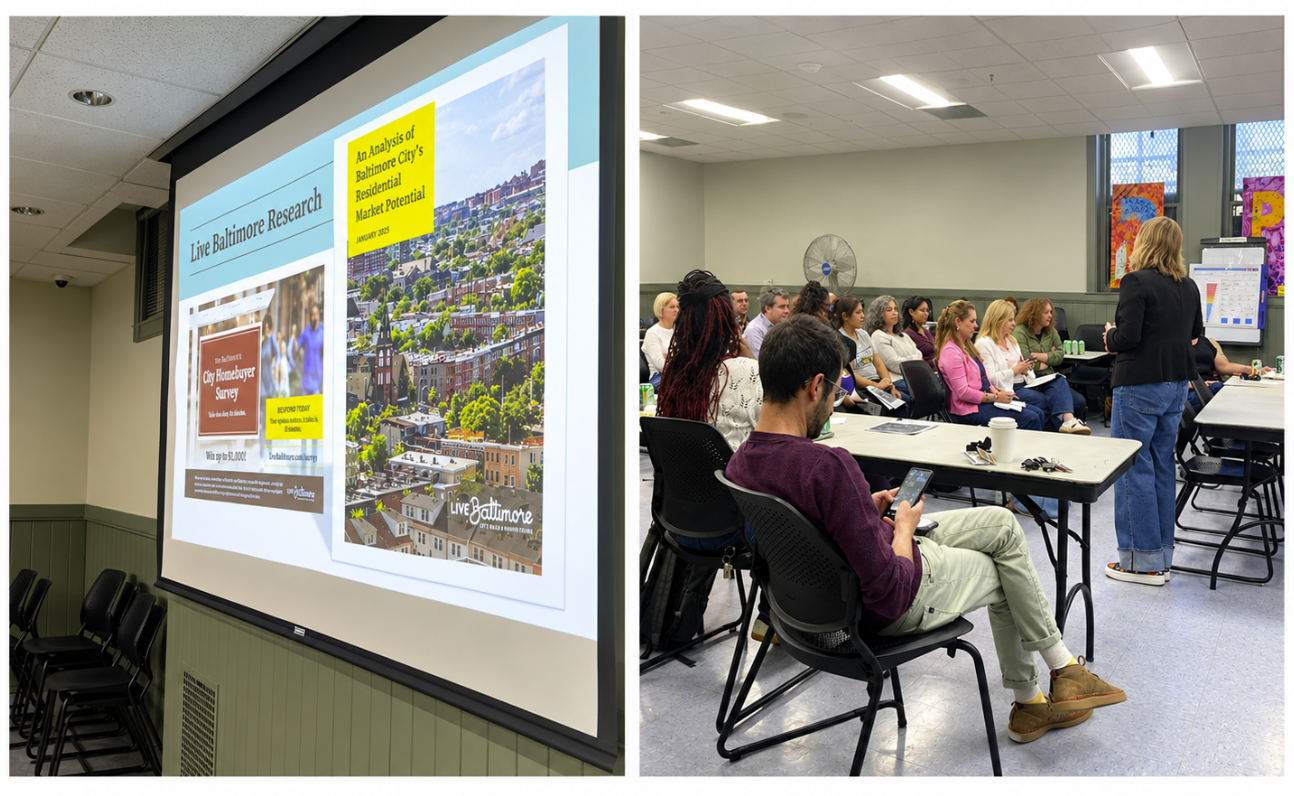
Baltimore’s community development organizations apply a data-driven approach informed by Live Baltimore’s latest publications.
Four Takeaways for Marketing and Sales
Start housing counseling early. Buyers who finish counseling are buyers HNI can underwrite. Counseling is required before a contract is signed, and homebuyer clubs and counseling courses can take two years or more to ready a household. Early referral also opens doors, including alternative credit programs for immigrant buyers. The earlier a prospective homebuyer begins counseling, the sooner they’ll know whether their credit and income can sustain a home.
Build the presale timeline around the incentive reservation period. Every state- or city-funded housing incentive runs on a clock: the number of days the agency will reserve funds for a specific household before releasing them to another buyer. HNI currently holds incentives for 120 days. Any presale strategy has to be designed around that window. Bringing buyers in at framing lets them choose finishes and builds their attachment to the home, but the reservation period sets how early that can happen. CDOs should plan backward from the funder’s timeline before they open a presale.
Give CDO leaders the underwriting information they need. CDOs recruit and organize the residents who become buyers, and they can only direct those residents well if they know how banks underwrite. Lenders and local agencies need to disclose their underwriting standards. Without that, CDOs cannot make shrewd decisions about whom to recruit, who needs counseling or credit repair first, and who is ready to move. HNI manually underwrites its loans, which takes more time but gives buyers more preparation. Fair housing law limits what lenders can share about individual buyers, so clear standards shared up front matter even more.
Design the system for sustainable homeownership. Expanding access to homeownership is an important neighborhood revitalization strategy, but access must be paired with responsible lending. We have a collective responsibility to ensure prospective buyers are financially prepared for homeownership and that lending decisions meet appropriate underwriting standards. Consider the Great Recession and its years’ long fallout. A sustainable homeownership outcome is better for the buyer, the neighborhood, and our city.
Building a Playbook Together
Eager for more? This recap builds on our first BVRI convening recap, on private acquisition. Lessons from across the cohort will inform a forthcoming Baltimore CDC Playbook, translating shared experience into practical guidance for the work ahead.
Thank you to Neighborhood Design Center and Maryland DHCD for partnering with MCIC to make these convenings possible.