From Possibility to Practice: Rural Development in Maryland
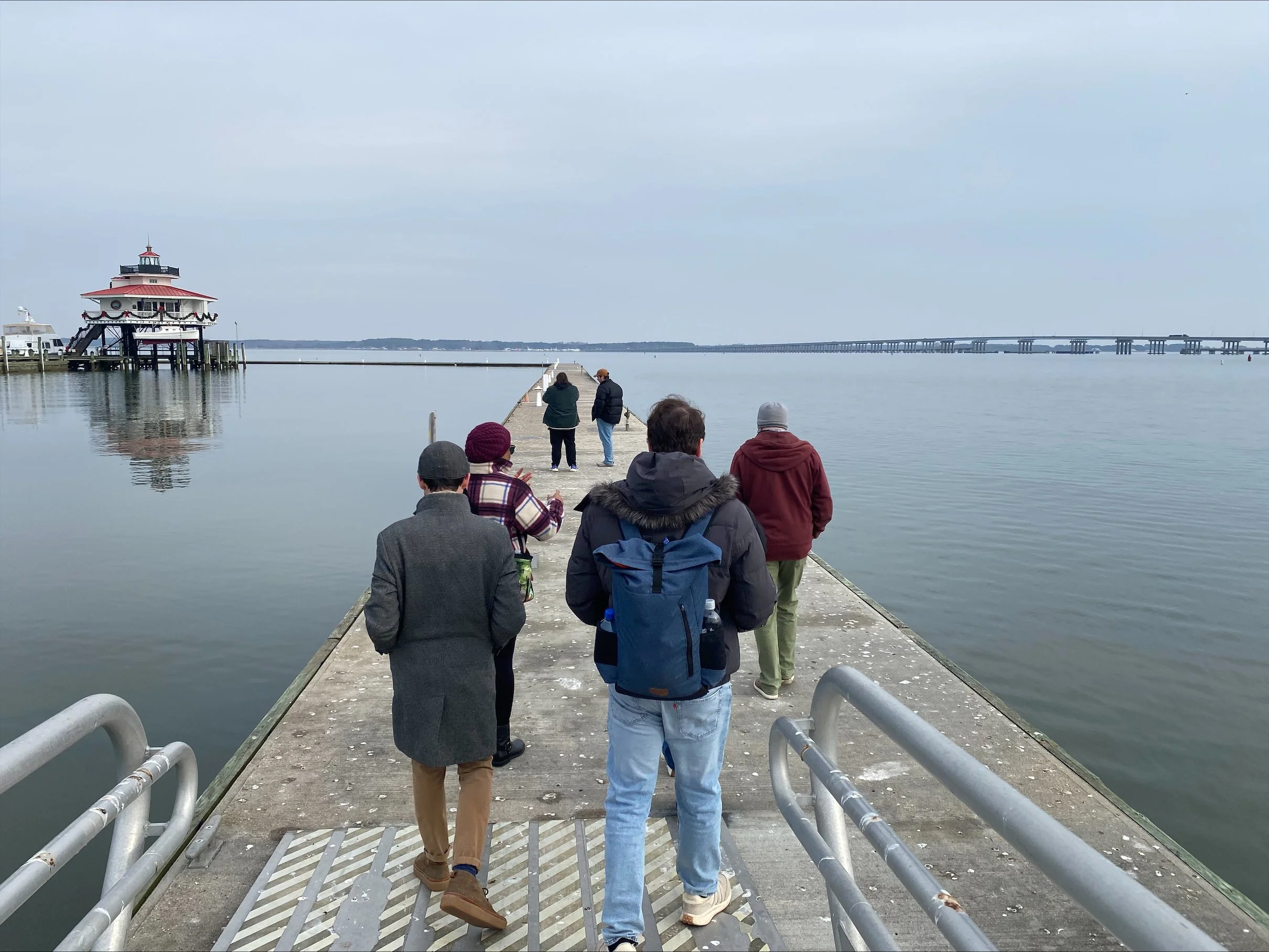
Maryland Community Investment Corporation and the Public Finance Initiative tour Cambridge, kicking off the rural convening.
This January, the Maryland Community Investment Corporation (MCIC) convened local leaders and public officials from across the state for “Investing in People, Place, and Possibility,” a multi-day convening focused on a central question: what does it take to make rural development more possible in Maryland, equitably, consistently, and at scale?
That question is not theoretical. As part of MCIC’s recently completed strategic plan, prepared by S.B. Friedman Development Advisors, we examined nearly two decades of New Markets Tax Credit (NMTC) activity in Maryland. The findings were stark: roughly 90 percent of NMTC projects in Maryland over the life of the program have taken place in Baltimore City. While those investments have delivered meaningful impact, the data also revealed a clear and persistent gap. Rural communities across Maryland have been largely left out of NMTC deployment.
The rural convening was designed as a direct response to that imbalance.
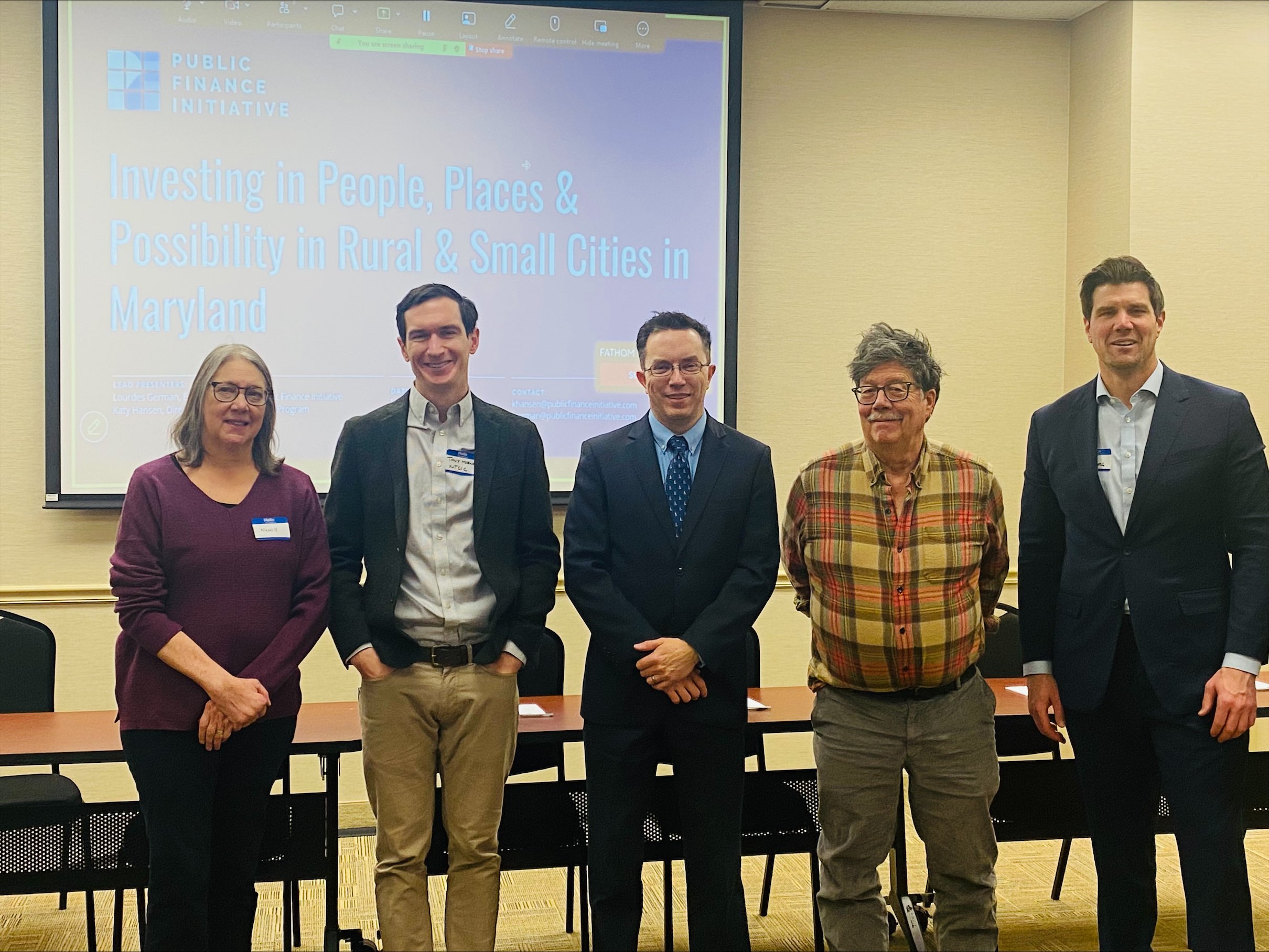
Cross Street Partners, NTCIC, MCIC, NeighborWorks Capital, and U.S. Bank line up for a NMTC 101 panel focused on the Packing House.
Participants gathered from Dorchester, Washington, Allegany, St. Mary’s, Kent, and Anne Arundel Counties, alongside partners working across Mountain Maryland, the Eastern Shore, and Southern Maryland. Together, they brought forward project ideas, local knowledge, and a shared commitment to expanding access to capital in places where it has historically been hardest to deploy.
The convening opened in Cambridge with a walking tour of main street led by the Harriet Tubman Museum and Visitor Center, grounding the work in a powerful historical throughline — from Harriet Tubman and Gloria Richardson to the civic and economic realities shaping rural communities today. That grounding carried into a Lunch & Learn at The Packing House, one of the largest NMTC projects on the Eastern Shore. Local leaders and project partners reflected on lessons from the deal, including the importance of public finance tools like tax increment financing and the need to bundle smaller projects so more community-rooted sponsors can access NMTC capital.
Day One focused on surfacing both opportunity and constraint. Maryland Department of Housing and Community Development Secretary Jake Day captured the moment succinctly: “There is a bevy of project ideas in the state that lacked a clear government financing answer. We created MCIC to be that answer.” Participants shared early-stage rural project concepts already taking shape, from agricultural processing facilities to expanded services for older adults and community-serving recreational spaces. The vision was compelling. The challenge was translating that vision into financeable projects.
Through an NMTC 101 session and facilitated discussion, participants dug into what “readiness” truly means in the eyes of capital. Questions surfaced repeatedly: How do rural sponsors effectively position themselves to investors and Community Development Entities (CDE)? How can organizations manage years of compliance and documentation without exhausting limited staff capacity? What kinds of early, flexible capital are needed to bridge the gap between idea and investment?
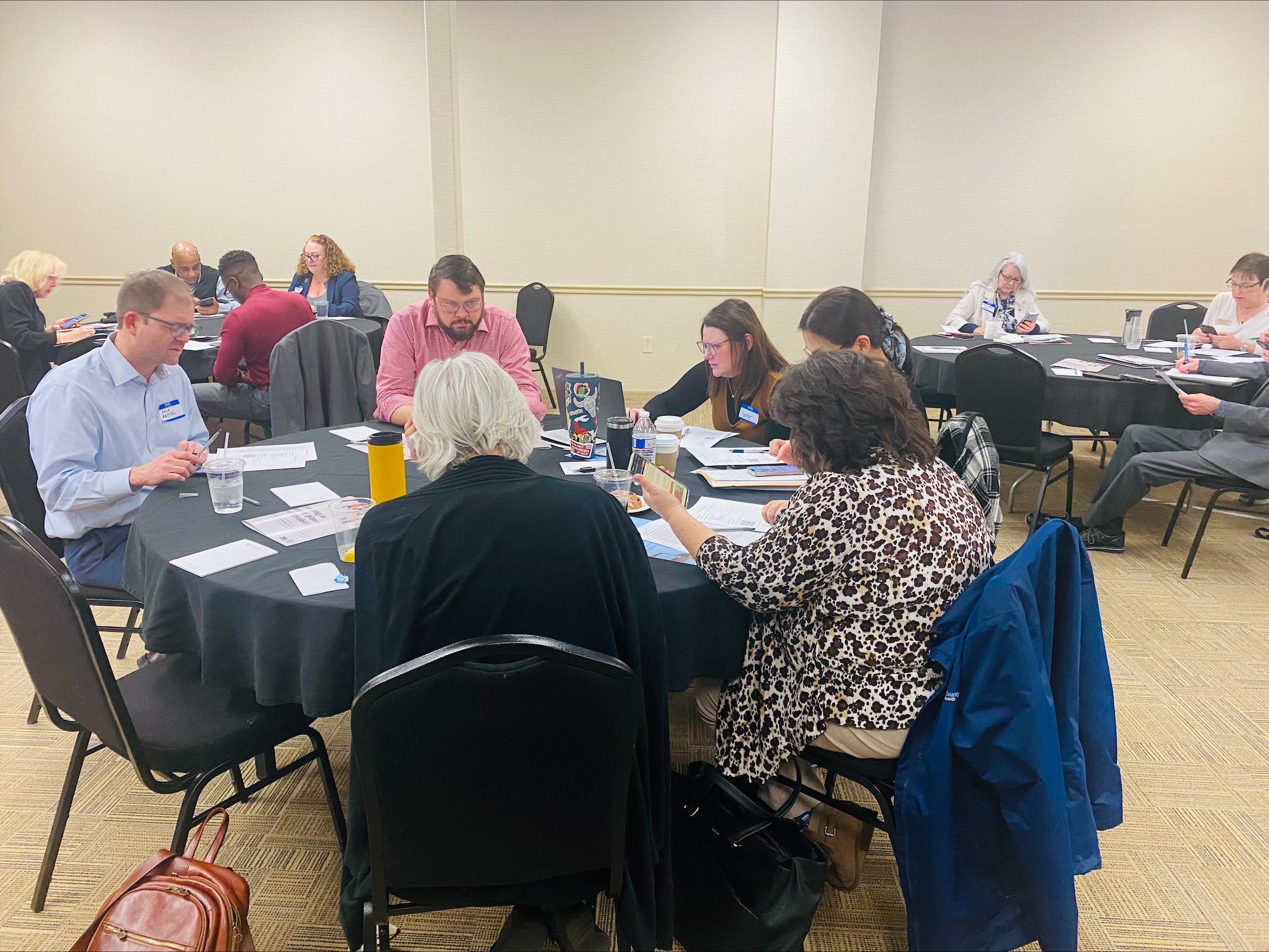
Rural leaders build their community development finance muscle at MCIC’s convening.
Day Two brought those questions into focus through a panel discussion walking through the full anatomy of a rural NMTC deal, using The Packing House as a case study. Panelists representing the consultant, sponsor, CDE, investor, and leverage lender perspectives emphasized that successful rural development depends on trust, partnership, and coordinated risk-taking across the capital stack. Borrower readiness and flexible capital emerged as persistent gaps, but ones that can be addressed through intentional ecosystem-building.
MCIC is deeply grateful to The Public Finance Initiative for their partnership and technical assistance throughout the convening, and to the Robert Wood Johnson Foundation for their generous support. We also thank our program partners and the many local leaders who made this convening possible.
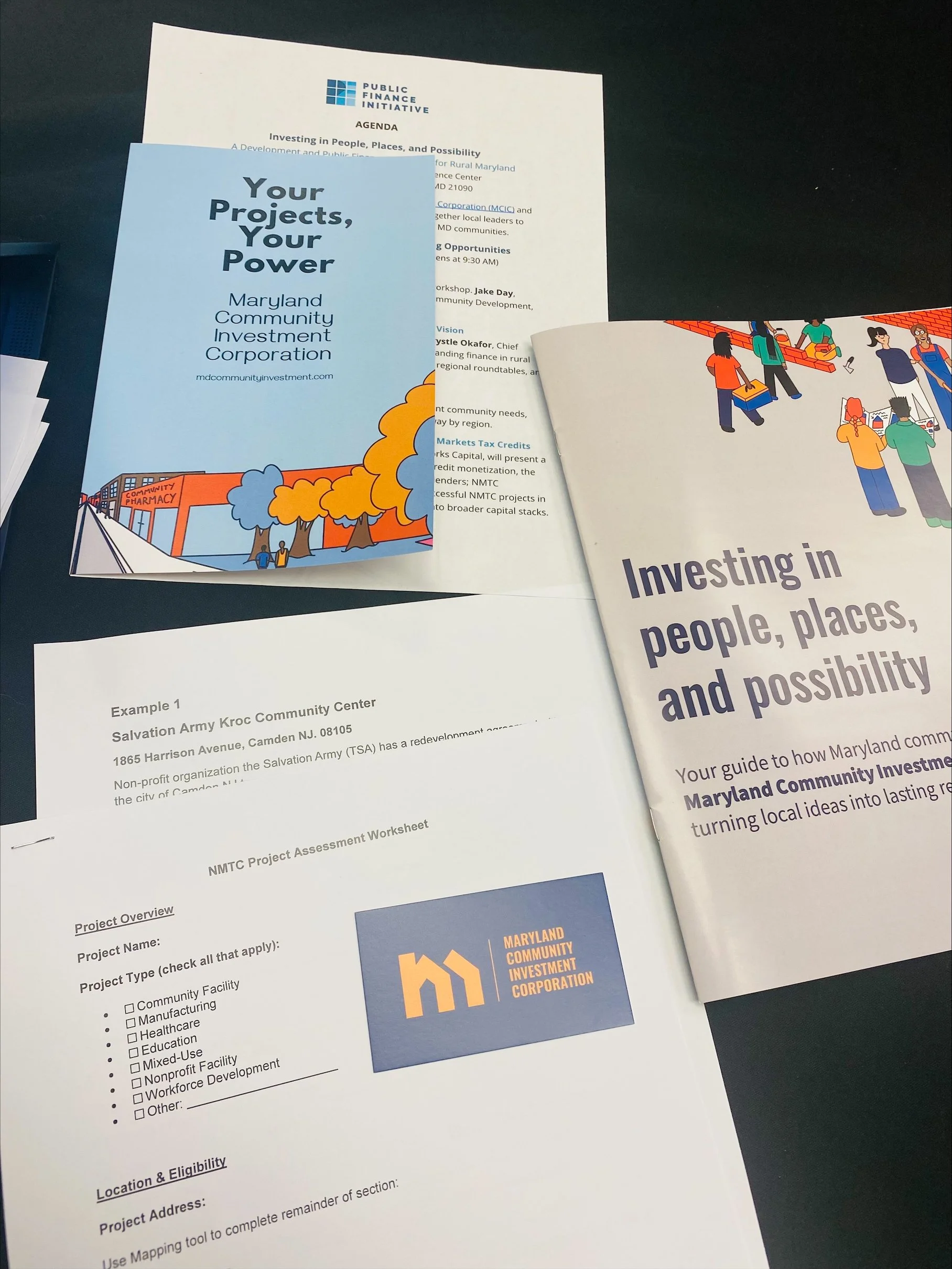
Materials from the Investing in People, Place, and Possibility rural convening.
As the convening closed, three clear calls to action emerged:
Learn how to work with MCIC by downloading and sharing our Partnership Toolkit.
Tell us about your mission-driven real estate project and join MCIC’s pipeline for financing and technical assistance.
Stay engaged by emailing us to sign up for one of MCIC’s regional Community Advisory Boards.
Rural Maryland has the ideas, leadership, and determination to deliver transformative projects. Investing in People, Place, and Possibility reaffirmed MCIC’s role in addressing long-standing geographic inequities in NMTC deployment and in helping ensure that rural communities are no longer an afterthought, but a priority.